
Confirm what is underground
Available plans are a starting point, not a substitute for appropriate locating and verification. Unknown services must be resolved before excavation proceeds.
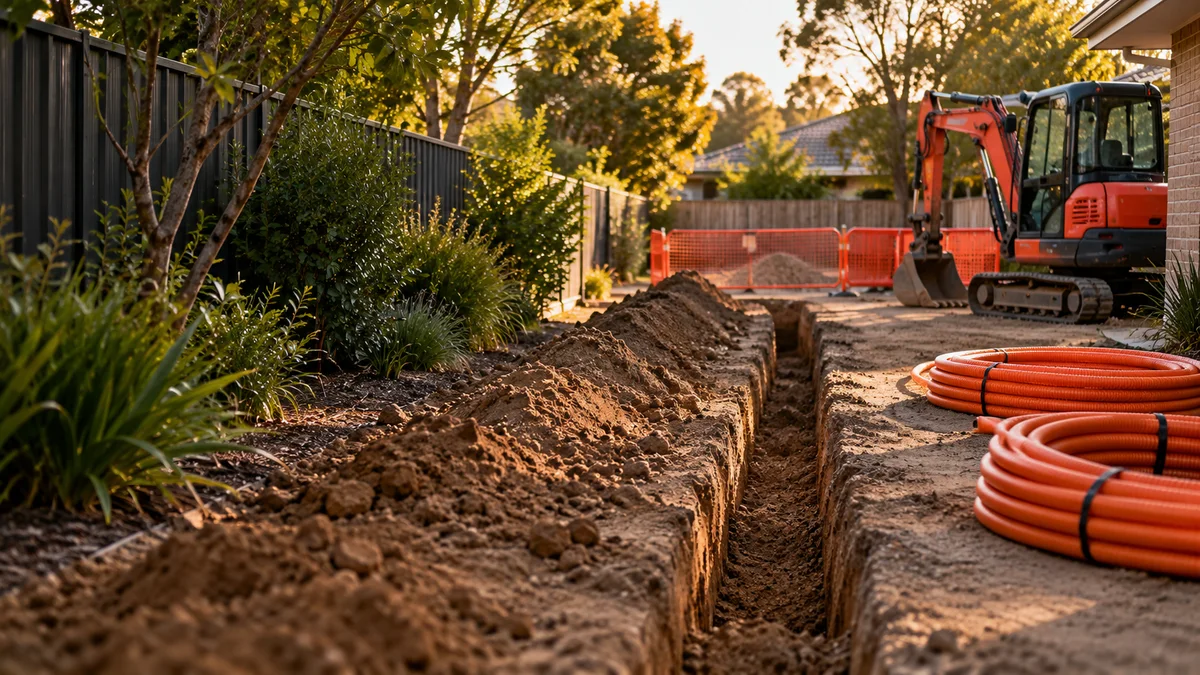
Plan trenches around identified services and the requirements of the relevant installer, allowing for access, separation, reinstatement and protection of existing infrastructure.
Melbourne Utility Trenching projects benefit from a clear understanding of the site, the intended finish and how the work connects with the rest of the property.
Utility trenching is a coordinated task between the excavation operator and the trades responsible for the services. The route and requirements should be agreed before ground is opened.
Planning should cover machine access, underground services, soil movement, spoil removal and protection of structures or landscaping that will remain. Clear levels and an agreed finish reduce uncertainty once excavation starts. For this service, confirm what is underground and plan the reinstatement are useful matters to discuss when preparing the scope.
Share your property address, approximate dimensions and photos of the work area. Include the route from the street, any nearby structures and what you want the finished space to achieve.
Explore the details ↓A trench crosses ground that may already carry water, gas, power, telecommunications or drainage. Finding out what is there is the first job, not an afterthought.
Before You Dig Australia is a free national referral service. Lodging an enquiry passes your dig location to registered asset owners, who respond with plans of their assets in the area. Allow up to two working days for plans to arrive, and lodge before the trench route is finalised so the plans can shape it.
Treat the plans as a starting point, not a substitute for locating services on site. Because they come from registered asset owners, services installed privately on your property, such as a pipe to a garage or cabling to a garden light, may not appear. Locating services on site, and exposing them carefully where the trench must cross, is a separate step to discuss with whoever is doing the work.
A clear brief connects the material, the site and the final result.
Available plans are a starting point, not a substitute for appropriate locating and verification. Unknown services must be resolved before excavation proceeds.
Consider how paths, lawns and driveways will be restored. Access for service installation and any inspection should be built into the sequence.

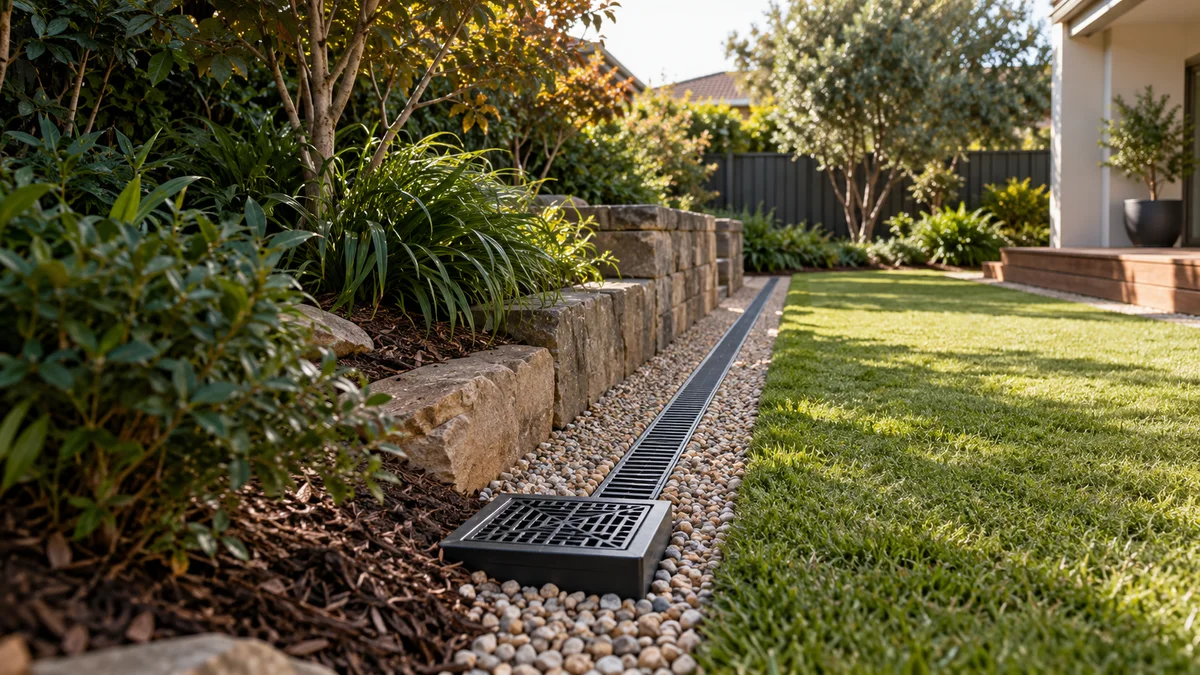

Supporting landscape and groundwork illustrations show connected project considerations, not completed work by Melbourne Retaining Walls.

The shortest line between two points is not always the best trench route. What the trench passes through decides how much has to be put back afterwards.
A trench cut through the root zone of an established tree can sever roots the tree depends on. Where a service must pass near a tree, a route that curves around the root zone, or a different method for that section, may be worth discussing with an arborist before the line is fixed.
Paving, concrete paths and established lawn each take time and material to reinstate. Lifting pavers carefully and stacking them for relaying, saw-cutting concrete neatly instead of breaking it, and cutting turf so it can be replaced all leave a better finish than rebuilding from scratch. Agree who reinstates each surface, to what standard, and how settlement of the backfilled trench will be handled once the ground has had time to settle.
Every property has different constraints. Use these steps to prepare a useful discussion about utility trenching.
Send the address, measurements and access photos, plus any existing drawings or reports.
Discuss the options above, any design input, drainage connections and the responsibilities for approvals.
Check preparation, materials, installation, disposal and reinstatement. Agree exclusions and timing before work is scheduled.
A single trench often serves an electrician, a plumber and sometimes a gas or data installer. Each has their own requirements, and the trench has to satisfy all of them before it is closed.
Keeping a simple marked-up plan of the trench route, with photos taken before backfilling, helps anyone who needs to dig nearby in future.
Start planning with the details that matter.
Ask about your project ↗Connection work is a separate scope carried out by the appropriately qualified trade. Confirm responsibilities for bedding, installation, inspection and backfilling in the quote.
For this work, confirm what is underground and plan the reinstatement are useful starting points. Site access, dimensions, existing conditions, disposal and any specialist requirements also need to be reflected in the scope.
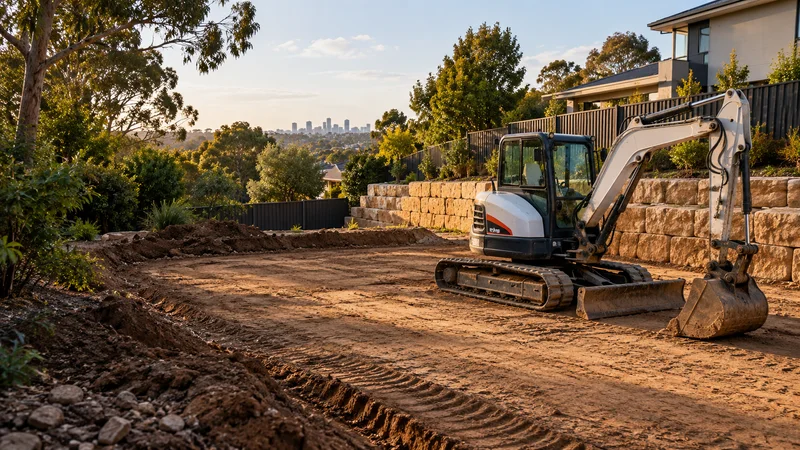
Prepare the ground around agreed levels and site constraints, considering underground services, machine access, material handling and spoil removal before excavation.
Learn more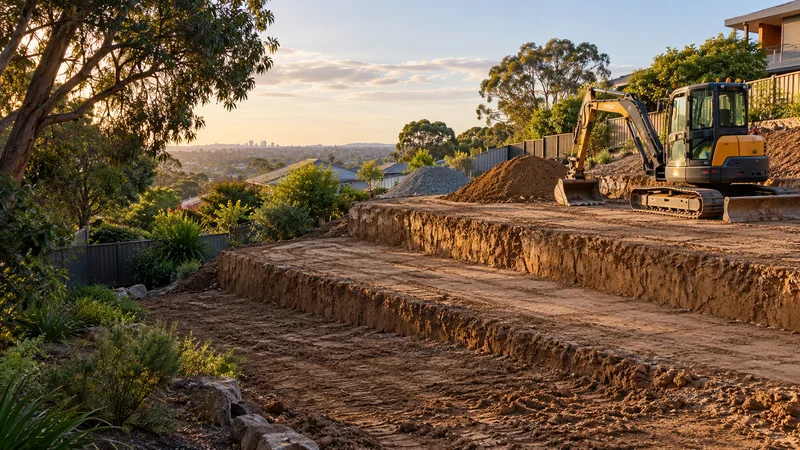
Slope excavation & levelling in Melbourne: plan terraces, finished levels, cut and fill, drainage, access and soil movement.
Learn more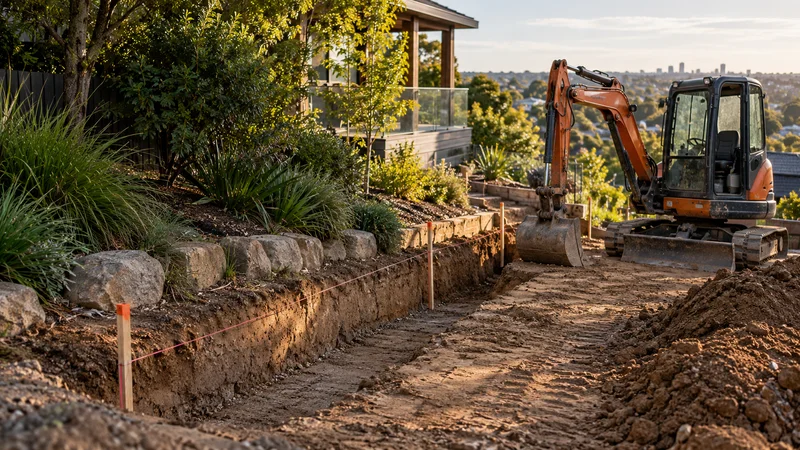
Retaining wall excavation in Melbourne: set-out, service checks, equipment access, footing preparation, spoil handling and reinstatement.
Learn moreShare your ideas, your site and what you want to achieve.