
Locate the issue
The position of damp areas, ground levels and existing structures helps guide investigation. A surface puddle alone does not establish the need for subsoil pipework.
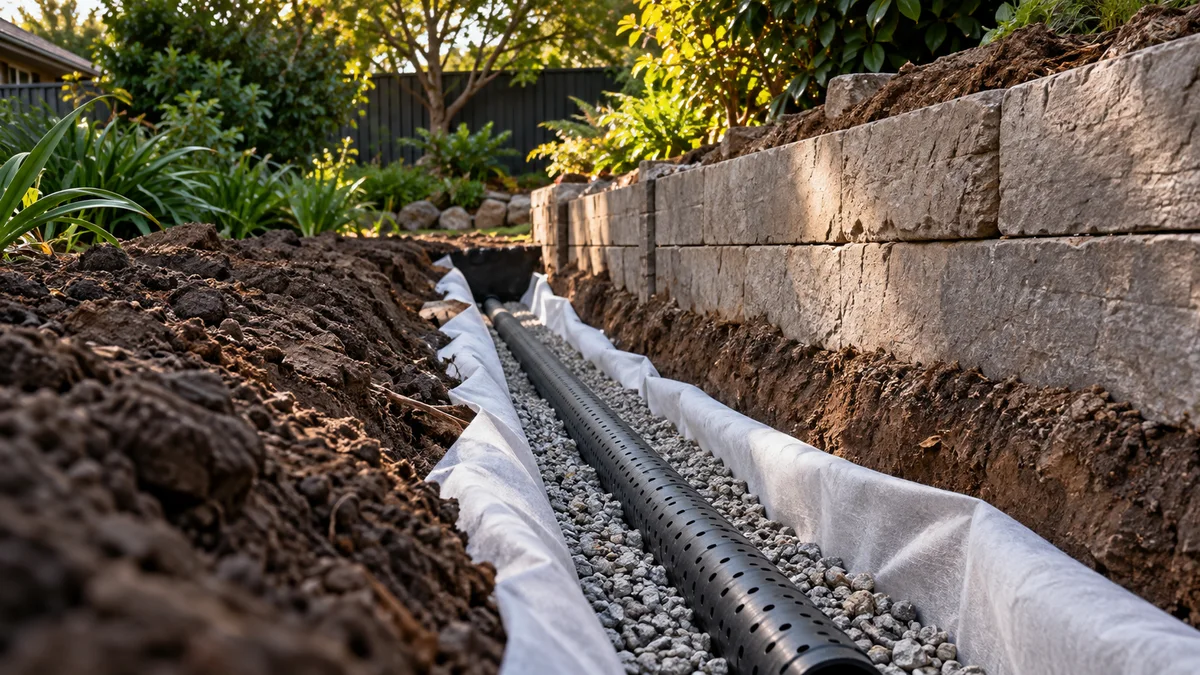
Explore below-ground water collection where appropriate, with trench alignment, filter materials and outlet levels assessed alongside existing foundations and landscaping.
Melbourne Subsoil Drainage projects benefit from a clear understanding of the site, the intended finish and how the work connects with the rest of the property.
Subsoil drainage deals with water within the ground rather than only on its surface. It needs a clear purpose and a viable outlet to be useful.
A useful plan identifies where water is coming from, how it will be collected and where it can discharge. Pipe routes, excavation depth, access, surface reinstatement and future maintenance should all be considered before installation begins. For this service, locate the issue and keep the system serviceable are useful matters to discuss when preparing the scope.
Share your property address, approximate dimensions and photos of the work area. Include the route from the street, any nearby structures and what you want the finished space to achieve.
Explore the details ↓A subsoil drain gives water already in the ground an easier route than the soil around it. Gravity does the rest, provided the trench, pipe and outlet have a continuous fall.
The pipe, often called ag pipe, is slotted or perforated along its length and sits in a trench surrounded by free-draining material. Water moving through the soil reaches that more open zone, drops into the pipe through the slots and travels along it to the outlet.
Because it relies on water finding the trench, a subsoil drain tends to work best when it crosses the path ground water is taking, such as along the uphill side of a building, path or retaining wall. A drain in the wrong position can run dry while the problem area stays wet.
Filter materials matter as much as the pipe. Clean aggregate keeps water moving, while a geotextile wrap or pipe sock is often used to hold back fine soil. The right combination depends on the ground around the trench, so it should come from the design rather than habit.
A clear brief connects the material, the site and the final result.
The position of damp areas, ground levels and existing structures helps guide investigation. A surface puddle alone does not establish the need for subsoil pipework.
Pipe alignment, filtration and access for maintenance should be considered as part of the design. Planting and future landscape work can affect long-term access.

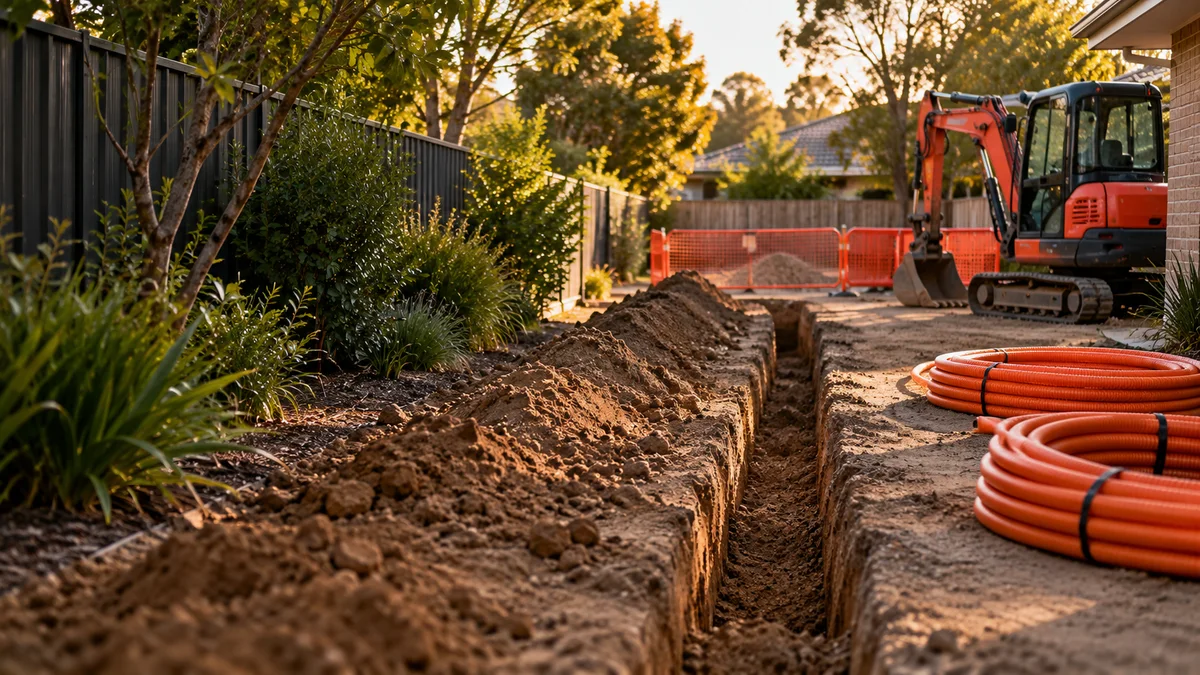
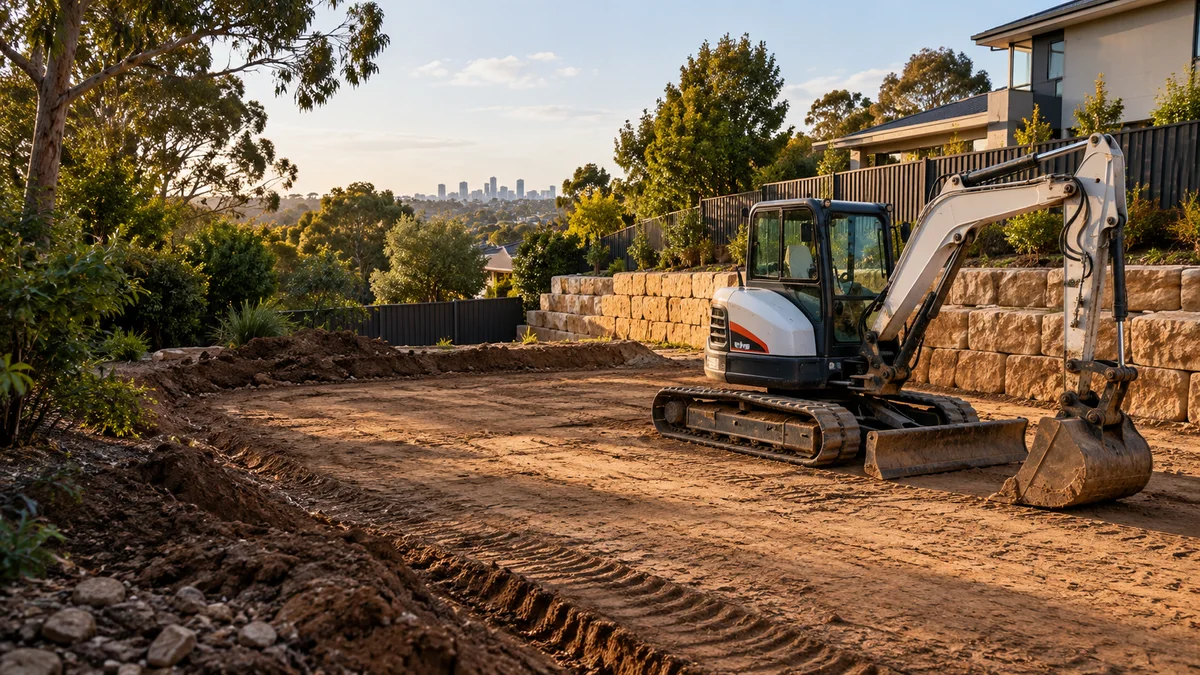
Supporting landscape and groundwork illustrations show connected project considerations, not completed work by Melbourne Retaining Walls.
A subsoil drain can work well at first and then slowly lose capacity. Knowing the usual causes helps when choosing materials and planning what grows nearby.
Fine particles carried by moving water can pass into the aggregate and pipe, settling wherever flow slows. Suitable filter materials and a steady fall reduce how quickly this builds up.
Roots seek out moisture, and a damp trench is an easy target. Vigorous species planted close to the line can send roots into the slots and choke the pipe over time.
If the outlet is buried, crushed or backed up, the whole line stops working even when the pipe itself is clear. The outlet is often the first place worth checking.
Later landscaping, fence posts or heavy machinery can crush or dislodge a buried pipe. Knowing where the line runs helps avoid damage during future work.
Every property has different constraints. Use these steps to prepare a useful discussion about subsoil drainage.
Send the address, measurements and access photos, plus any existing drawings or reports.
Discuss the options above, any design input, drainage connections and the responsibilities for approvals.
Check preparation, materials, installation, disposal and reinstatement. Agree exclusions and timing before work is scheduled.
Start planning with the details that matter.
Ask about your project ↗No. The collection method and purpose differ, although both need a suitable discharge arrangement. One system should not be substituted for the other without assessment.
For this work, locate the issue and keep the system serviceable are useful starting points. Site access, dimensions, existing conditions, disposal and any specialist requirements also need to be reflected in the scope.
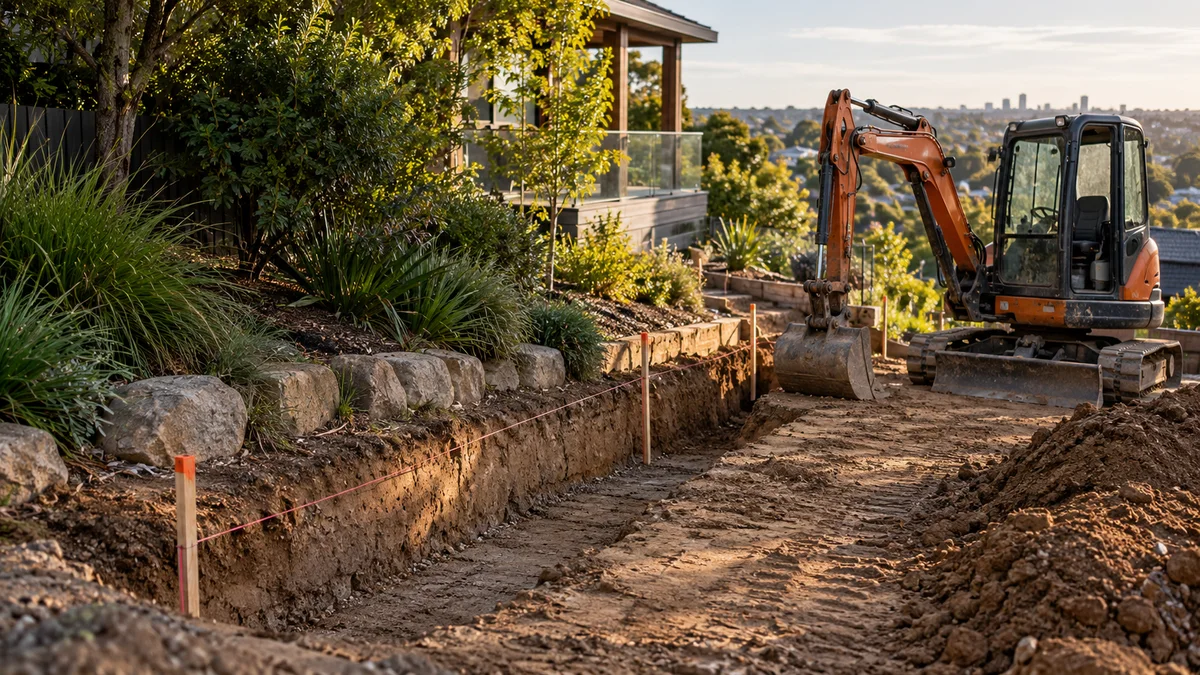
A drain that cannot be reached cannot be cleaned. Planning access at the start is far simpler than digging up a garden later to find a blockage.
Inspection openings, sometimes called risers or flushing points, give a way into the line from the surface. Water or drain-cleaning equipment can be introduced through them to move silt towards the outlet, and they allow a quick check on whether water is flowing.
Their position should suit both the drain and the finished landscape. Openings at the upstream end and at changes of direction are a common approach, but the design will set what is appropriate. Keep caps visible and reachable rather than hidden beneath paving, deep mulch or new garden beds.
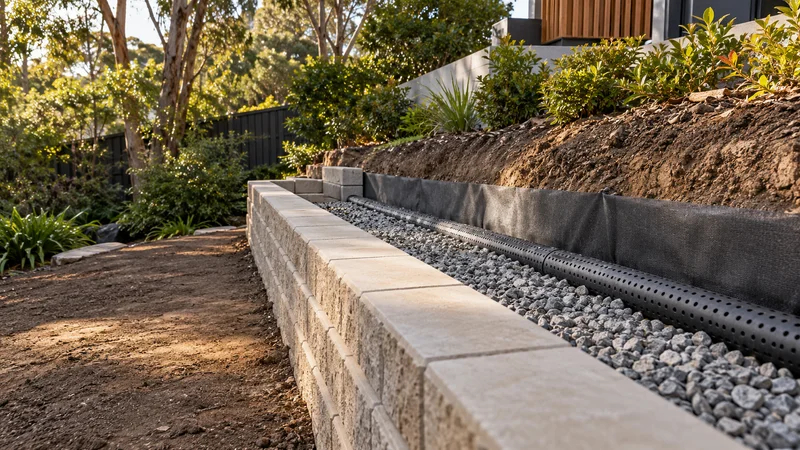
Retaining wall drainage in Melbourne: water sources, drainage layers, collection pipes, outlets, inspection access and quote preparation.
Learn more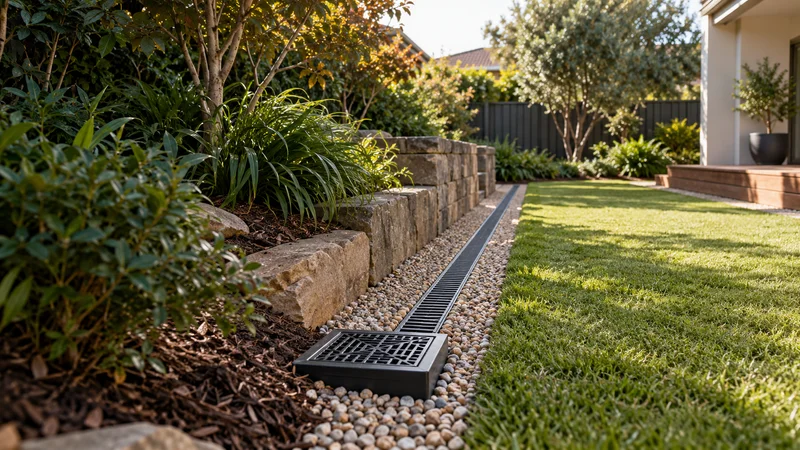
Investigate persistent wet areas and surface flow, then compare drainage and grading options suited to the way your property actually behaves.
Learn more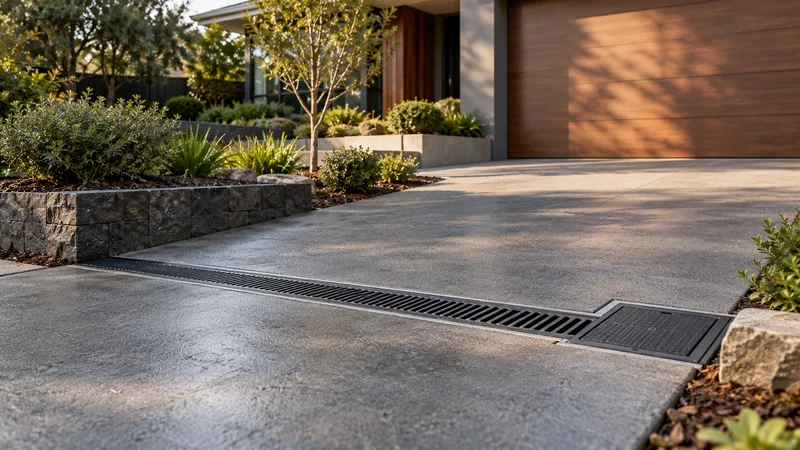
Consider pits, channels and pipework as a connected system, with surface levels, lawful discharge and the relevant qualified trades identified early.
Learn moreShare your ideas, your site and what you want to achieve.